Every day, we encounter hundreds of pieces of information. We scroll through news feeds, receive links via messaging apps, and read posts shared on social media. But how much of that information is actually true? In 2024, the World Economic Forum (WEF) ranked misinformation and disinformation as the number one global risk for the next two years. With the rapid advancement of AI technology, deepfakes, auto-generated fake news, and sophisticated phishing scams are exploding in volume.
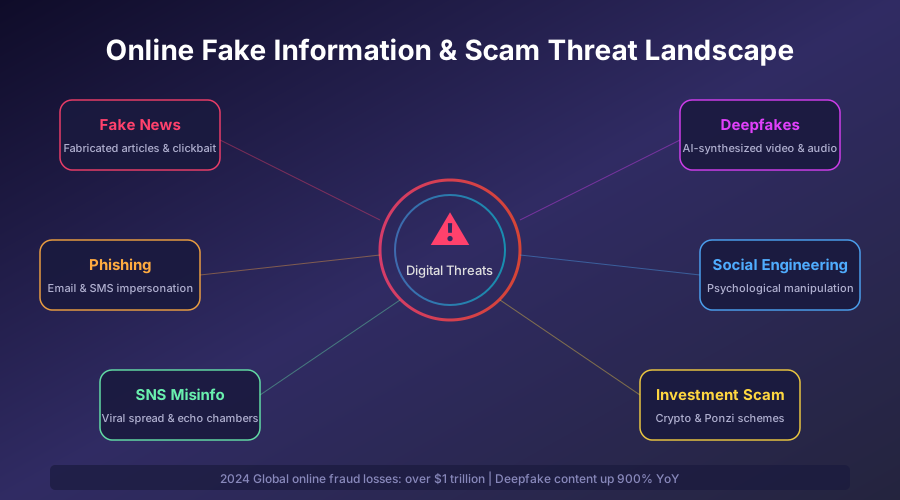
In this article, we analyze the types of fake information encountered online, evolving scam techniques, the threat of deepfakes, and the mechanisms of misinformation spread through social media. We also present concrete methods and tools for identification and prevention.
Types of Fake Information: What Is Real and What Is Fake #
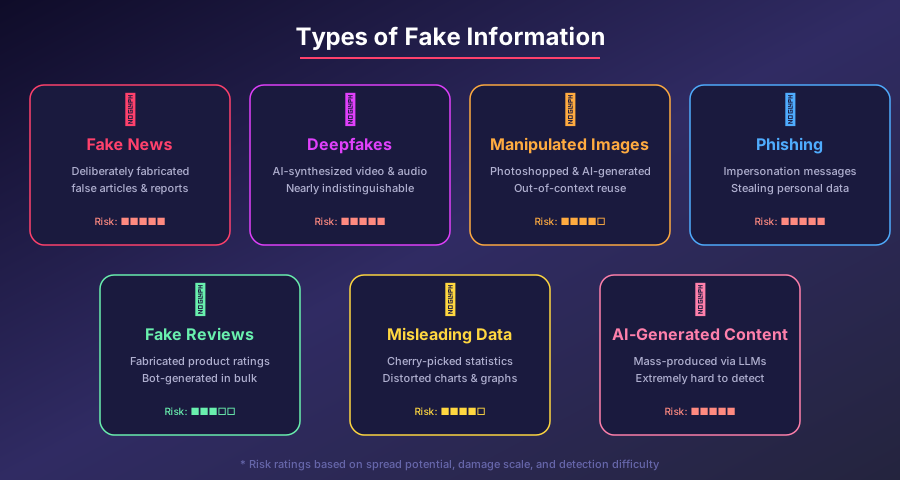
Fake information does not exist in a single form. It is divided into various types based on intent and format, each deceiving us in different ways.
Fake News #
These are deliberately fabricated false articles. Fake news websites mimicking the design of legitimate media outlets are a prime example. During the 2016 US presidential election, a village in Macedonia operated hundreds of fake news sites for advertising revenue, becoming an infamous case study. Political fake articles continue to spread rapidly through messaging apps and online communities during election seasons worldwide.
Deepfakes #
Content where real people’s faces or voices are synthesized using AI technology. In 2024, a finance team employee at a multinational corporation in Hong Kong was tricked by a deepfake video conference into transferring approximately $25 million. Every participant in the call, including the CFO, was a deepfake.
Manipulated Images and Context Distortion #
This involves either manipulating images directly or reusing real images in completely different contexts. In 2023, an AI-generated image of Pope Francis wearing a white puffer jacket was shared millions of times, mistaken for a real photograph.
Phishing and Scams #
These involve impersonating official organizations to steal personal information or money. Classic examples include “failed delivery” text messages and “your account has been locked” emails. Recently, these have evolved to the point where AI generates personalized phishing messages automatically.
Evolution of Scam Techniques: From Email to AI #
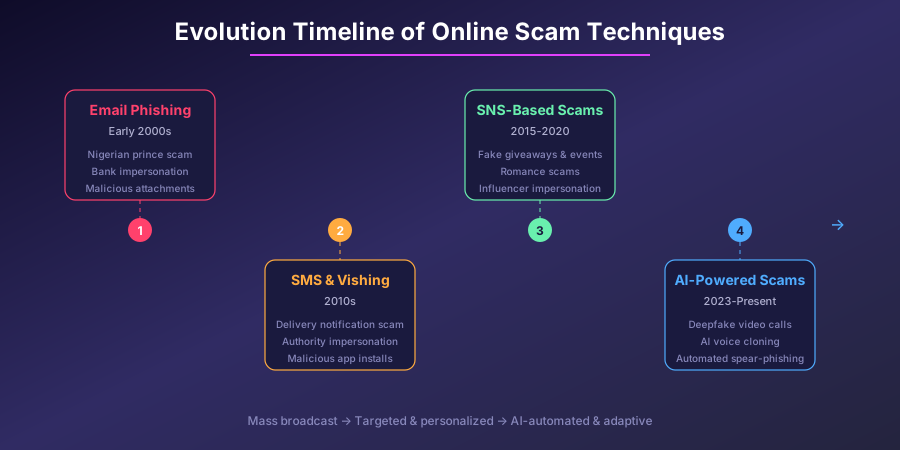
Online scams have continuously evolved alongside technological advancement. Simple techniques of the past have merged with AI to become extremely difficult to identify.
Generation 1: Email Phishing (2000s) #
Early email phishing, epitomized by the “Nigerian prince” scam, was relatively easy to identify due to grammar errors and awkward phrasing. Yet even during this period, annual damages reached billions of dollars.
Generation 2: SMS and Voice Phishing (2010s) #
With smartphone proliferation, text message scams (smishing) and phone scams (vishing) surged. In South Korea, voice phishing impersonating prosecutors and financial regulators became a serious social issue, with damages reaching $150 million in 2023 alone.
Generation 3: Social Media-Based Scams (2015-2020) #
The explosive growth of social media created new scam types: fake giveaways, romance scams, influencer impersonation, and fraudulent online stores. According to the FBI, romance scam losses exceeded $1.3 billion in 2022 alone.
Generation 4: AI-Powered Scams (2023-Present) #
The emergence of generative AI has ushered scam techniques into an entirely new phase. Deepfake video calls, AI voice cloning, and automated spear-phishing are now reality. Research shows that AI-generated phishing emails have a 60% higher click-through rate than human-written ones.
The Deepfake Threat: An Era When Seeing Is No Longer Believing #
Deepfake technology has exploded over the past three years. Deepfake content increased by over 900% from 2023 to 2024, reaching a level where ordinary people can easily create them using free apps.
Why Deepfakes Are Dangerous #
- Financial Fraud: As in the Hong Kong case mentioned above, deepfake video calls impersonating CEOs or executives are used to steal large sums of money.
- Reputation Damage: Illegally synthesized videos using celebrities’ or ordinary people’s faces cause severe harm. In South Korea, deepfake sexual crimes via Telegram caused public outrage in 2024.
- Public Opinion Manipulation: Attempts to influence elections through deepfake videos of politicians making fabricated statements are occurring worldwide.
- Trust Erosion: The perception that “any video could be fake” paradoxically creates the “Liar’s Dividend” phenomenon, where even genuine evidence is doubted.
How to Identify Deepfakes #
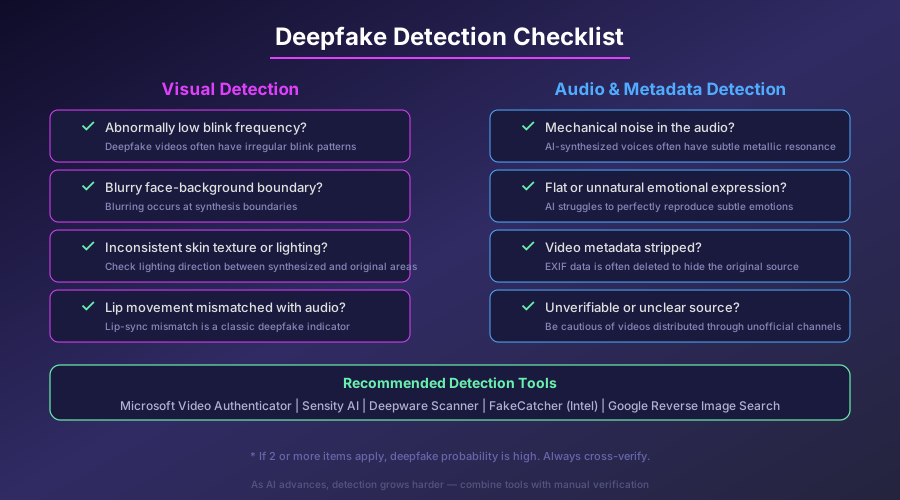
- Eye Blinking: Early deepfakes had abnormally low blink frequency, though newer models have improved on this.
- Face Boundaries: Subtle blurring or color differences occur at the boundary between synthesized faces and backgrounds.
- Lighting Inconsistency: The lighting direction on the face may differ from the background lighting.
- Lip-Sync Errors: Subtle mismatches between audio and lip movement remain the most reliable indicator.
- Use Detection Tools: Employ professional detection tools such as Microsoft Video Authenticator, Sensity AI, and Intel FakeCatcher for verification.
Misinformation Spread on Social Media: Why Lies Travel Faster Than Truth #
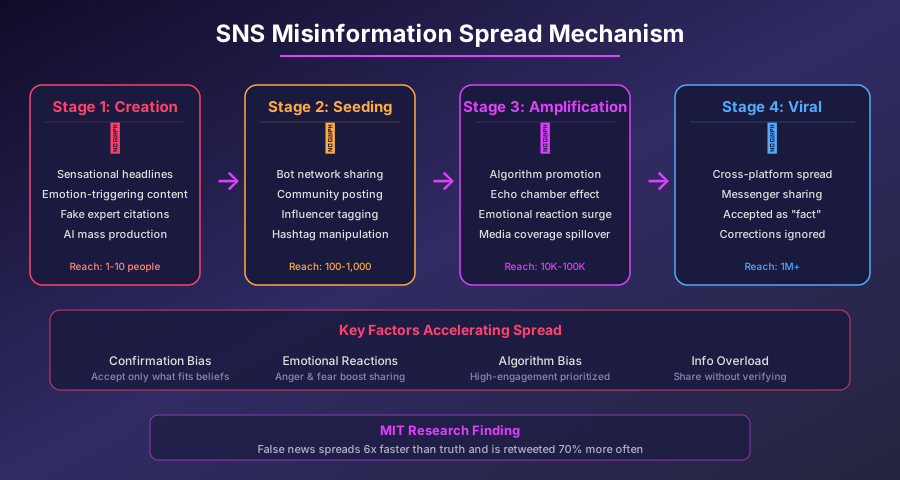
According to MIT’s 2018 study published in Science, false news spreads 6 times faster than truth and is retweeted 70% more often. This is the result of human psychological biases combined with platform algorithms.
The Psychology of Spread #
- Confirmation Bias: People uncritically accept information that aligns with their existing beliefs. Fake news matching one’s political orientation is more likely to be shared without fact-checking.
- Emotional Reactions: Content that triggers anger, fear, or surprise is shared immediately without rational judgment. Misinformation creators know this precisely and craft provocative headlines.
- Social Proof: The psychology of “so many people shared it, so it must be true” takes effect. Share counts and likes are mistaken as indicators of credibility.
- Information Overload: In the flood of daily information, people lack the capacity to verify each piece and rely on intuition for judgment.
The Role of Platform Algorithms #
Social media algorithms optimize for engagement. Provocative, emotion-triggering content generates more clicks and shares, so algorithms recommend it to more users. This structurally facilitates the spread of misinformation.
Echo Chambers and Filter Bubbles #
Echo chambers, where like-minded people exchange information among themselves, and filter bubbles, where algorithms show users only information matching their preferences, create environments where fake information solidifies into “fact” within specific groups.
Identification Methods: Fact-Check Tools and Practical Guide #
While filtering out 100% of fake information is impossible, a systematic verification process and tools can help identify a significant portion.
4-Step Verification Process #
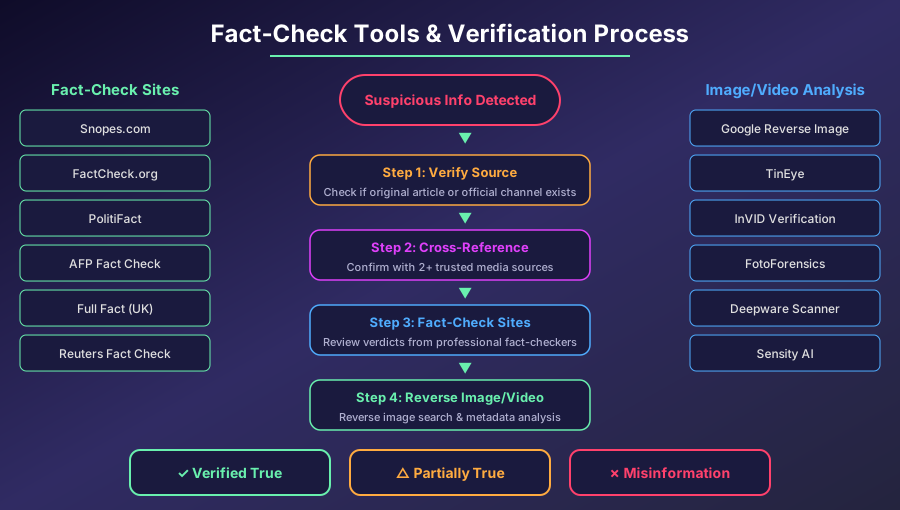
Step 1 - Source Verification: Check whether the original source of the information exists. Determine if it’s from an official organization or verified media outlet, or from an unidentified blog or social media post.
Step 2 - Cross-Reference: Verify whether the same content is being reported by two or more trusted media sources. “Exclusive reports” from a single source require particular caution.
Step 3 - Fact-Check Site Query: Check whether professional fact-checking organizations have already verified the information.
- Global: Snopes.com, FactCheck.org, PolitiFact, AFP Fact Check, Reuters Fact Check, Full Fact
- Tools: Google Fact Check Explorer
Step 4 - Reverse Image/Video Search: For information containing images, use Google Reverse Image Search or TinEye to verify the original source and initial posting date. For videos, the InVID plugin is useful.
Phishing Email/Text Identification Checklist #
- Does the sender’s email domain match the official domain? (e.g.,
@paypal.comvs@paypal-security.com) - Does it emphasize urgency demanding immediate action? (“Your account will be deleted within 24 hours if you don’t act now”)
- Does it request direct entry of personal information (passwords, SSN, card numbers)?
- When hovering over a link, does the displayed URL differ from the official site?
- Does it contain spelling errors or awkwardly translated sentences?
Prevention Guidelines: What Individuals and Organizations Must Follow #
Protecting yourself from fake information and scams requires changing habits alongside technical preparation.
Personal Guidelines #
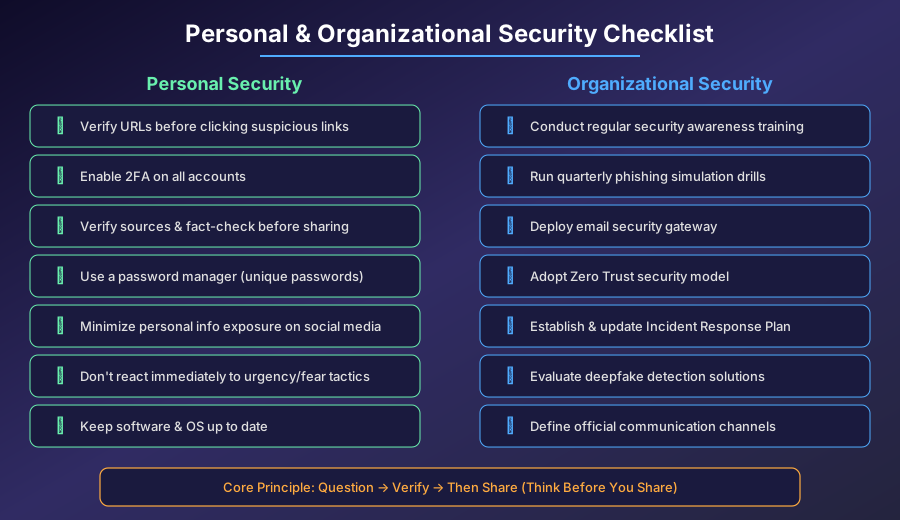
- “Verify Before Sharing” Habit: Pause for 3 seconds before emotionally reacting and check the source. The more shocking or anger-inducing the information, the more cautious you should be.
- Enable Two-Factor Authentication: Set up 2FA on all major accounts (email, financial, social media). Authentication apps (Google Authenticator, Authy) are safer than SMS.
- Password Management: Use unique passwords for each account and utilize password managers (1Password, Bitwarden).
- Minimize Personal Information Exposure: Don’t over-share personal information on social media. Birth dates, phone numbers, and addresses become raw material for social engineering.
- Question Urgent Messages: Messages containing urgent language like “right now,” “within 24 hours,” or “your account is at risk” should be treated with suspicion. Verify directly through official channels.
- Software Updates: Always keep your OS, browser, and apps up to date. Unpatched software becomes an attack vector.
Organizational Guidelines #
- Security Awareness Training: Conduct security training for all employees quarterly or semi-annually.
- Phishing Simulations: Send realistic phishing emails to employees to train their response capabilities.
- Zero Trust Model: Apply the principle of “never trust, always verify” rather than “trust but verify.”
- Incident Response Plan: Establish procedures for rapid response when security incidents occur and update them regularly.
Legal Recourse: What to Do When You’ve Been Victimized #
If you’ve been victimized by fake information or scams, prompt legal action is crucial.
Reporting Channels #
- FBI Internet Crime Complaint Center (IC3): File complaints at ic3.gov for US-based cyber crimes.
- Federal Trade Commission (FTC): Report scams at reportfraud.ftc.gov.
- Action Fraud (UK): The UK’s national reporting center for fraud and cybercrime.
- EUROPOL: For cross-border cyber crimes within the EU.
- Local Law Enforcement: Always file a report with local police as well.
Key Steps After Being Scammed #
- Freeze Accounts: Immediately contact your bank or financial institution to freeze compromised accounts.
- Change Passwords: Reset passwords for all potentially compromised accounts.
- Document Everything: Save screenshots, emails, messages, and transaction records as evidence.
- Credit Monitoring: Place fraud alerts on your credit reports and monitor for unauthorized activity.
- Report to Platforms: Report fake accounts, scam pages, and fraudulent content to the respective social media platforms.
Global Regulatory Trends #
The EU introduced the AI Act in 2024, mandating explicit labeling of deepfake content. Multiple US states have passed deepfake-related legislation, and federal law discussions on banning deepfake use during elections are ongoing. The UK’s Online Safety Act also addresses the spread of misinformation through digital platforms.
Conclusion: Digital Literacy Is the Best Defense #
Technology continues to advance, and scam techniques evolve alongside it. No perfect technological barrier exists. Ultimately, the most powerful defense is digital literacy — the ability to critically understand and evaluate digital information.
The essentials can be summarized in three points:
- Question it: If information seems too good, too shocking, or too urgent, be suspicious first.
- Verify it: Check the source, cross-reference it, and use fact-checking tools.
- Don’t share it: Don’t share unverified information. The fake information you share could harm someone else.
To navigate the online world safely, we need the habit of asking “Is this really true?” one more time about every piece of information we encounter. This small habit is the most reliable way to protect ourselves and those around us from fake information and scams.
References and Useful Links