NASA’s monumental ‘Artemis’ program, aimed at returning humanity to the Moon, is drawing global attention. In particular, the Artemis II mission, which will see astronauts orbit the Moon for the first time in half a century, is a crucial milestone that will mark a new chapter in the history of space exploration. However, unexpected defects recently discovered in key components of the Orion spacecraft have led to a delay in the launch schedule, raising growing concerns about the safety of crewed spaceflight.
In the extreme environment of space, even a minor defect can lead to fatal consequences directly impacting astronauts’ lives. This article will deeply analyze the safety concerns of the Orion spacecraft (such as heat shield damage and life support system issues) that led to the Artemis II launch delay. We will also detail the technical challenges NASA faces to overcome these issues and the future of deep space exploration.
Overview of the Artemis Project and Artemis II Mission #
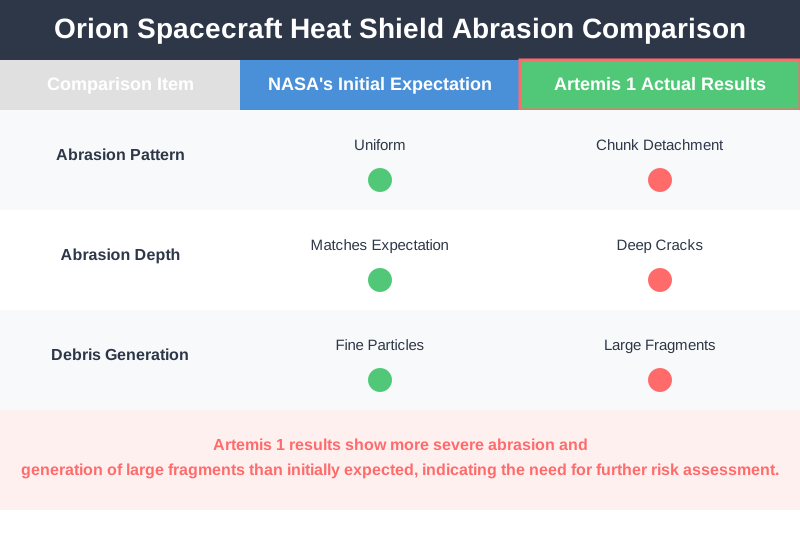
The Artemis program is a multi-stage space project that goes beyond mere lunar landings, aiming to build a sustainable human base on the Moon and use it as a stepping stone for eventual crewed missions to Mars.
Following the successful completion of Artemis I (an uncrewed test flight), Artemis II carries the critical mission of having four astronauts directly verify the Orion spacecraft’s life support systems and manual control capabilities in space.
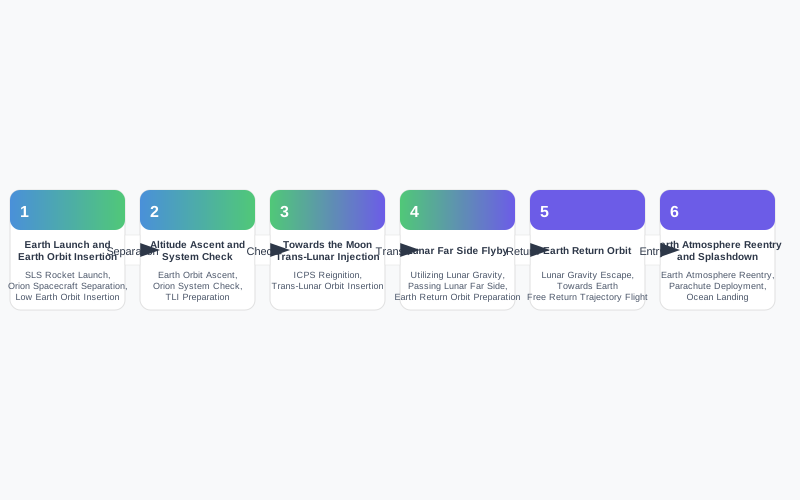
Artemis II Mission Profile (Expected Flight Trajectory) #
Artemis II will not land on the lunar surface but will adopt a ‘free-return trajectory,’ circling the far side of the Moon and returning to Earth. This is a safety feature designed to allow the spacecraft to naturally return to Earth using the Moon’s gravity, even in the event of an engine failure or other emergency.
- Earth Launch and Earth Orbit Insertion: The Space Launch System (SLS) rocket will launch the spacecraft into low-Earth orbit.
- Altitude Increase and System Check: For approximately 24 hours, the spacecraft will orbit Earth, testing the Orion spacecraft’s life support systems and other components.
- Trans-Lunar Injection (TLI): The upper stage rocket will ignite to propel the spacecraft towards the Moon.
- Lunar Flyby: The spacecraft will enter the Moon’s gravitational field and pass approximately 10,000 km above the far side of the Moon. At this point, humanity will venture into the deepest reaches of space ever traveled.
- Earth Return Trajectory: Using the Moon’s gravity, the spacecraft will change direction and head back to Earth.
- Earth Atmospheric Reentry and Splashdown: After re-entering the atmosphere at hypersonic speed, the spacecraft will safely splash down in the Pacific Ocean. (Total mission duration: approximately 10 days)
Controversy over Orion Spacecraft Heat Shield Damage #
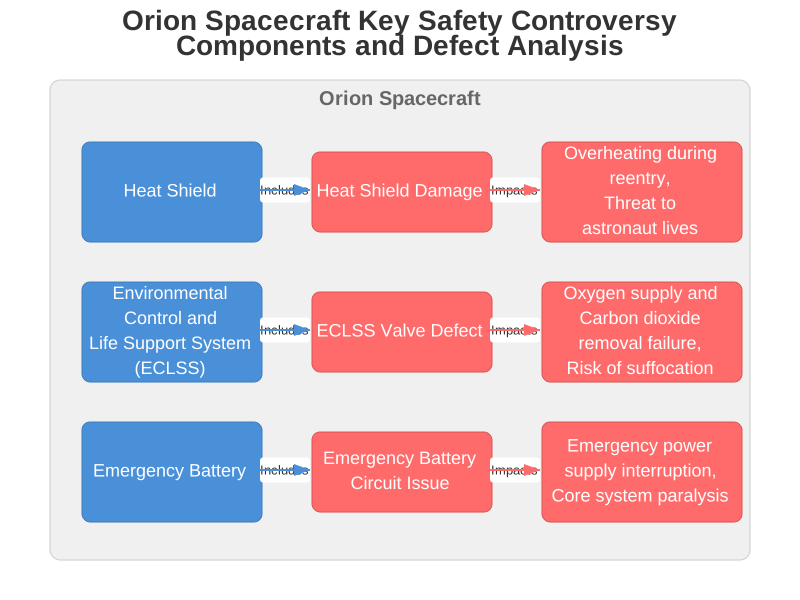
The most critical reason for the Artemis II launch delay is the damage to the Orion spacecraft’s heat shield discovered after the completion of the uncrewed Artemis I mission.
When a spacecraft returns to Earth from lunar orbit, its atmospheric reentry speed reaches Mach 32 (approximately 40,000 km/h). The temperature generated by friction between the spacecraft’s surface and the atmosphere can soar to about 2,760°C (5,000°F). The heat shield is the only barrier protecting the astronauts inside the spacecraft from this immense heat.
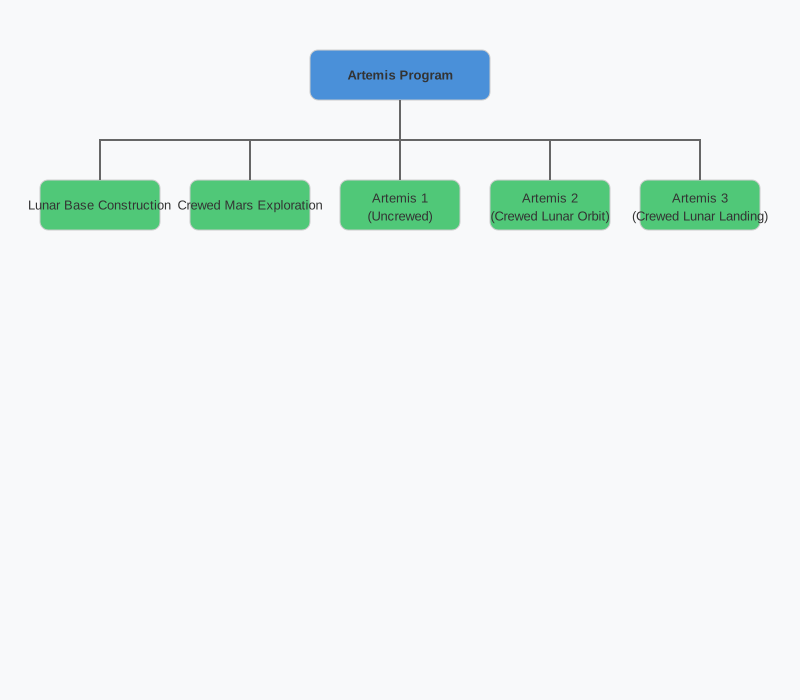
Expected vs. Actual Ablation Phenomenon of the Heat Shield #
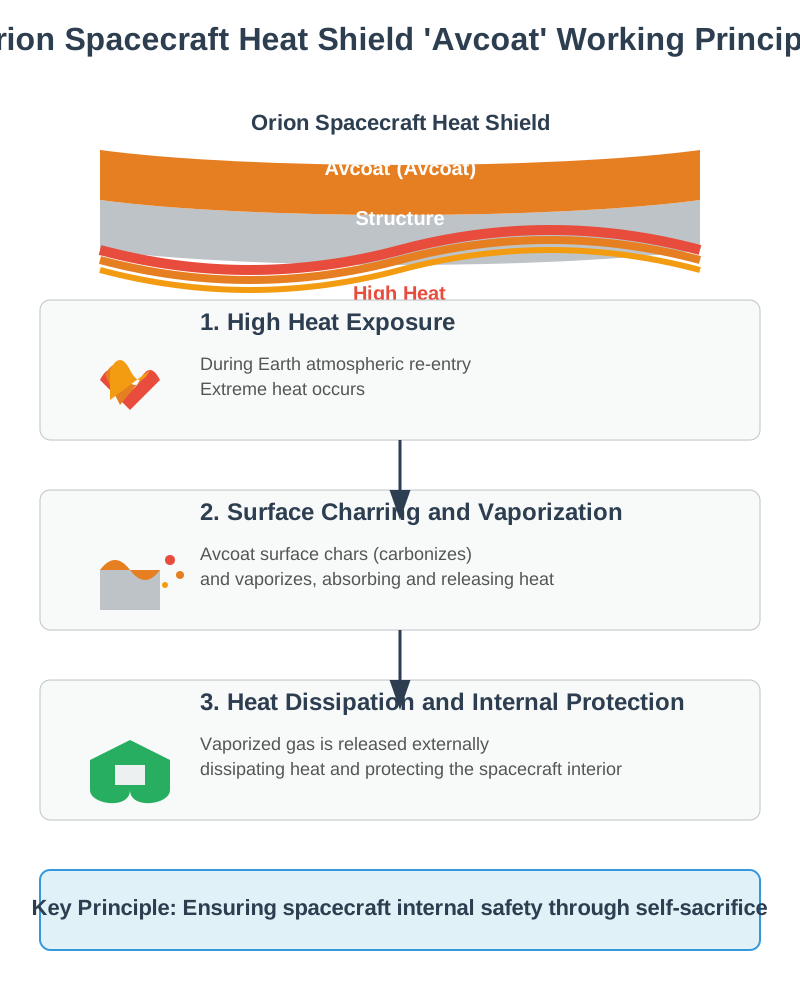
The Orion spacecraft’s heat shield is made of a special ablative material called ‘Avcoat.’ This material works by charring and shedding its surface when exposed to high heat, releasing heat in the process and preventing it from being transferred inside.
However, analysis of the heat shield after Artemis I’s return revealed a damage pattern entirely different from what NASA engineers had expected.
| Category | NASA’s Initial Expectation | Artemis I Actual Result | Risk and Problem |
|---|---|---|---|
| Wear Pattern | Surface melted evenly and slowly vaporized | Material in specific areas detached in chunks | Irregular wear could lead to heat concentration in specific areas |
| Wear Depth | Consistent with computer simulation models | Cracks and holes much deeper than expected occurred | Risk of heat reaching internal structures or crew due to thinning heat shield |
| Debris Generation | Scattered as fine gas and particles | Relatively large fragments flew around the spacecraft | Potential for fragments to strike parachute deployment mechanisms or other critical sensors |
Such ‘irregular cracking and chunk detachment’ is a fatal risk factor that is absolutely unacceptable for crewed flights. If a specific part of the heat shield wears away too early, exposing the spacecraft’s underlying structure directly to extreme heat, a tragedy similar to the Space Shuttle Columbia disaster could recur.
Life Support System and Battery System Flaw Issues #
In addition to the heat shield problem, flaws requiring remediation were also found in the Orion spacecraft’s internal hardware and Environmental Control and Life Support System (ECLSS).
1. Environmental Control and Life Support System (ECLSS) Valve Flaws #
For astronauts to breathe and survive in space, systems that remove carbon dioxide, supply oxygen, and maintain appropriate temperature and humidity must function perfectly. However, during testing, design flaws were found in some valve circuits related to the carbon dioxide removal system. The possibility of valves not opening or closing normally under certain conditions was raised, which could lead to a risk of suffocation for the crew during long-duration space stays.
2. Emergency Battery and Electrical Circuit Issues #
The Orion spacecraft is equipped with a Launch Abort System (LAS) designed to separate from the main spacecraft and safely extract astronauts in an emergency. Degradation and flaws were identified in the emergency battery circuits that power this system and supply electricity after separation. If power supply becomes unstable, essential survival functions such as parachute deployment or communication systems could be paralyzed.
To address these issues, NASA is redesigning the problematic hardware, conducting numerous ground tests, and pushing component reliability to its limits.
NASA’s Decision to Delay Launch and the Safety-First Principle #
Due to these complex technical issues, NASA has decided to delay the launch of Artemis II, originally scheduled for late 2024, to September 2025 (or later). This decision, made even at the cost of space exploration schedule delays, demonstrates NASA’s firm philosophy that “astronaut safety takes precedence over any schedule or political objective.”
In the past, NASA suffered painful sacrifices due to rushed schedules and safety complacency, including the Apollo 1 fire, the Challenger explosion, and the Columbia disintegration. These bitter historical lessons are deeply embedded in NASA’s current risk management system. Even minor differences in heat shield wear patterns or the potential for valve malfunctions are not dismissed as mere ‘margins of error’; instead, strict standards are applied, prohibiting flight until the root cause is identified and solutions are implemented.
Technical and Institutional Challenges for Successful Deep Space Exploration #
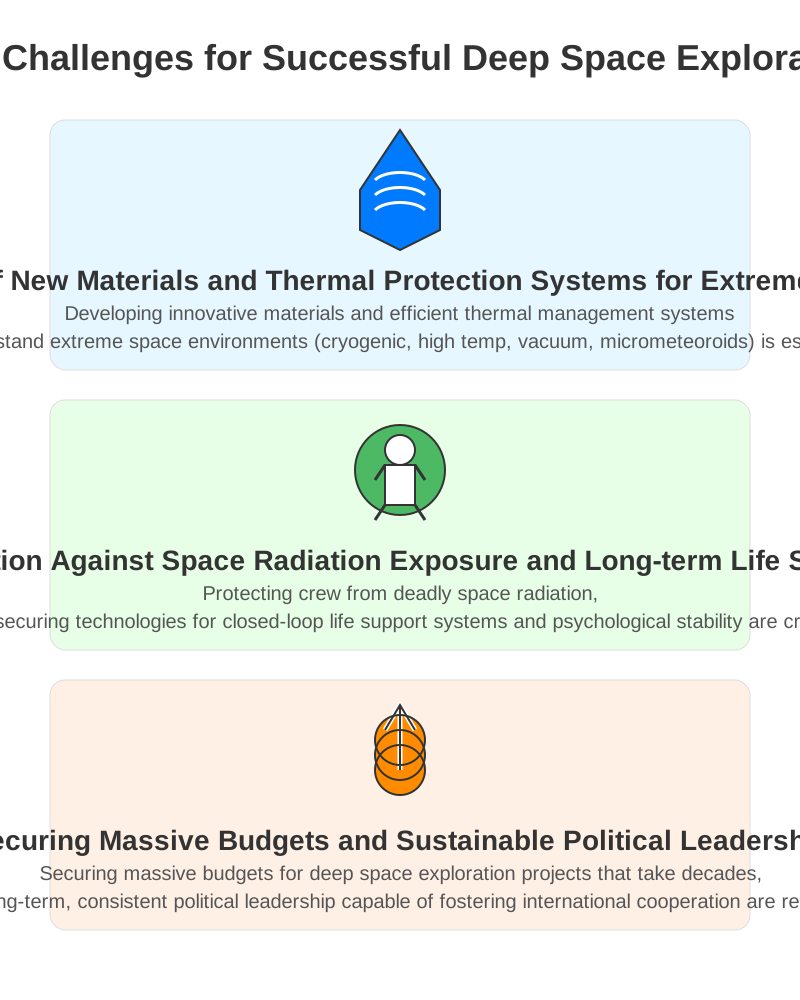
The safety concerns surrounding Artemis II are not merely problems with the Orion spacecraft alone. They highlight fundamental challenges that humanity must overcome to venture beyond the Moon to Mars and deeper into space.
[1] Development of New Materials and Thermal Protection Systems for Extreme Environments #
Traveling in low-Earth orbit (e.g., ISS) is vastly different from returning to Earth from deep space in terms of thermodynamic stress. It is essential to develop next-generation heat shield materials that are lighter yet can withstand faster and hotter reentry environments, along with advanced precise thermal analysis simulation technologies.
[2] Space Radiation Exposure Protection and Long-Term Life Support #
Deep space beyond lunar orbit is unprotected by Earth’s magnetic field, leaving it vulnerable to solar winds and galactic cosmic radiation. Through the Artemis missions, it is crucial to complete shielding technologies that minimize astronaut exposure and develop 100% reliable closed-loop life support systems (water/air recycling) that can operate flawlessly for months to years.
[3] Securing Massive Budgets and Sustainable Political Leadership #
Equally important as technical challenges is the institutional foundation. The Artemis program is a colossal project requiring astronomical budgets. Development delays inevitably lead to increased costs. Even with changes in government or economic conditions, the stability of funding and close cooperation with the international community (including Artemis Accords signatories) must support the unwavering pursuit of the long-term vision of space exploration.
Conclusion #
The launch delay of Artemis II and the controversy surrounding the Orion spacecraft’s heat shield damage remind us how difficult and risky space exploration remains. However, this thorough verification and problem-solving process will be the sturdy stepping stone for humanity to safely set foot on the Moon and, furthermore, journey to Mars.
Humanity’s great challenge to space does not stop. We encourage you to continue to pay attention to future test results and launch schedule updates to see how NASA overcomes its current technical difficulties and successfully launches Artemis II.