“Which programming language should I learn?” It’s a question every developer has faced at some point. There’s no single right answer, but there is clearly a better choice depending on your purpose. Here’s an honest comparison of the most relevant languages in 2026.
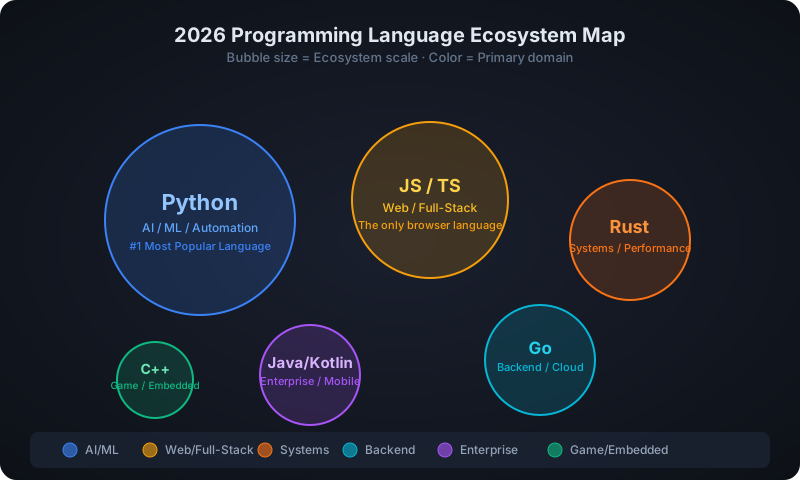
Python — The Undisputed #1 in the AI Era #
Python has essentially monopolized the AI/ML ecosystem. PyTorch, TensorFlow, LangChain, transformers — every major AI library is written in Python. Its concise syntax makes it accessible to beginners, and interactive development through Jupyter Notebooks accelerates experimentation.
The main weakness is speed. The GIL issue in CPython was experimentally removed in 3.13, but raw compute performance still lags behind C++ or Rust. However, libraries like NumPy and Pandas are implemented internally in C, so practical performance is more than sufficient for most tasks.
|
|
Recommended for: AI/ML engineers, data scientists, automation scripters, and all beginners
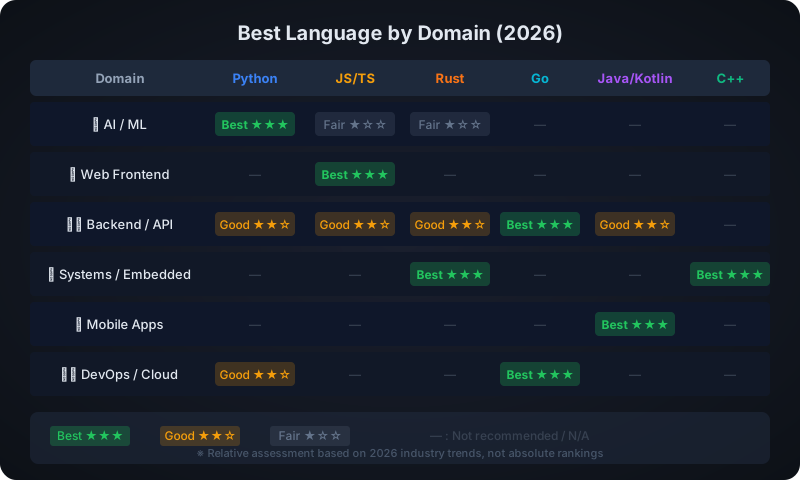
Best Language by Domain at a Glance #
Each language has a domain where it dominates. Rather than chasing the most popular language, the key is picking the language that aligns with your goal.
Rust — The Game Changer for Systems Programming #
Since its debut in 2015, Rust has consistently ranked #1 in “most loved language” surveys. It maintains C++ performance while guaranteeing memory safety at compile time. Thanks to its Ownership system, there are no memory leaks even without a garbage collector.
The Linux kernel, Windows, and Android have all officially adopted Rust code. Targeting WebAssembly allows high-performance code to run in the browser, continuously expanding its use cases.
|
|
The steep learning curve is a real drawback, but once mastered, the speed at which you can write bug-free code increases dramatically.
Recommended for: Systems programmers, embedded developers, WebAssembly engineers, performance-critical backend developers
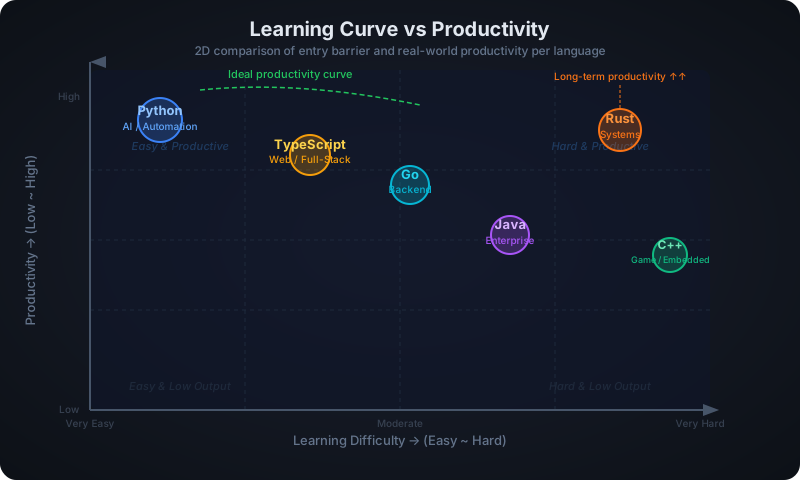
Learning Curve vs Productivity Comparison #
When choosing a language, don’t just ask “how hard is it?” — also consider how productive you’ll be in practice once you’ve learned it.
Go — The Pragmatic Choice for Backend Development #
Go, created by Google, places simplicity at its core. Goroutines make concurrency extremely easy to handle, and fast compilation keeps development cycles short. Docker, Kubernetes, Prometheus — the majority of cloud-native infrastructure is written in Go.
|
|
Go produces much smaller binaries than Java Spring, making it ideal for container environments.
Recommended for: Backend/microservice developers, DevOps engineers, API server developers
TypeScript — The Standard for Web Frontend #
JavaScript is the only language that runs natively in browsers, but its dynamic typing creates many pitfalls. TypeScript adds static types, dramatically improving maintainability in large codebases. The React, Next.js, and Node.js ecosystems have broadly migrated to TypeScript.
For full-stack developers, one language covers both frontend and backend — a significant efficiency gain.
Recommended for: Web frontend developers, full-stack developers, Node.js backend developers
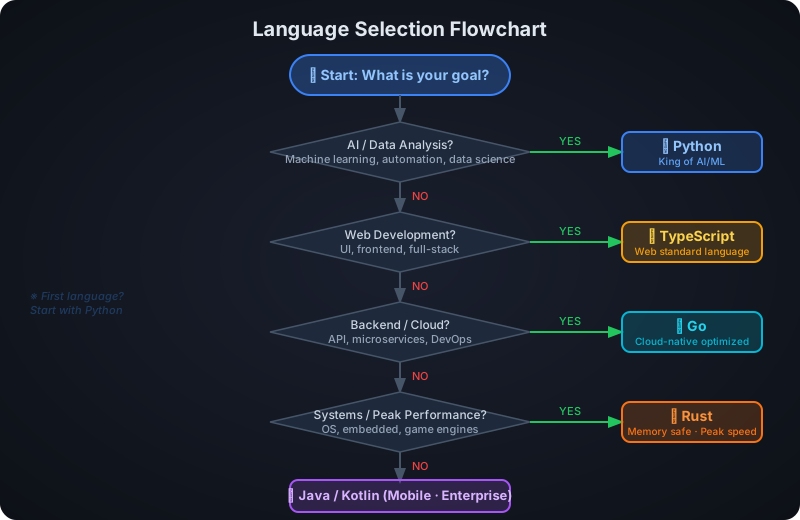
Finding the Right Language for You #
If you’re unsure about your direction, follow this decision flowchart.
Conclusion: There’s No Best Language — Only the Right Purpose #
Even in 2026, there’s no single “best programming language.” It all depends on what you’re building.
| Goal | Recommended | Reason |
|---|---|---|
| AI / Automation | Python | Overwhelming library ecosystem |
| Web / Full-Stack | TypeScript | Only browser language, type safety |
| Backend / Cloud | Go | Fast compile, simple concurrency |
| Systems / Performance | Rust | Memory safe + C++ level speed |
| Mobile / Enterprise | Kotlin/Java | Official Android, mature ecosystem |
If you’re choosing your first language, Python is the recommendation. The syntax is simple, the applications are broad, and it’s the most valuable tool in the AI era. For a second language, pick Rust, Go, or TypeScript based on your target domain.
A language is just a tool. Great developers don’t obsess over language choice — they focus on solving problems.