“A grandmother with dementia no longer recognizes her granddaughter. Is she still — a grandmother?”
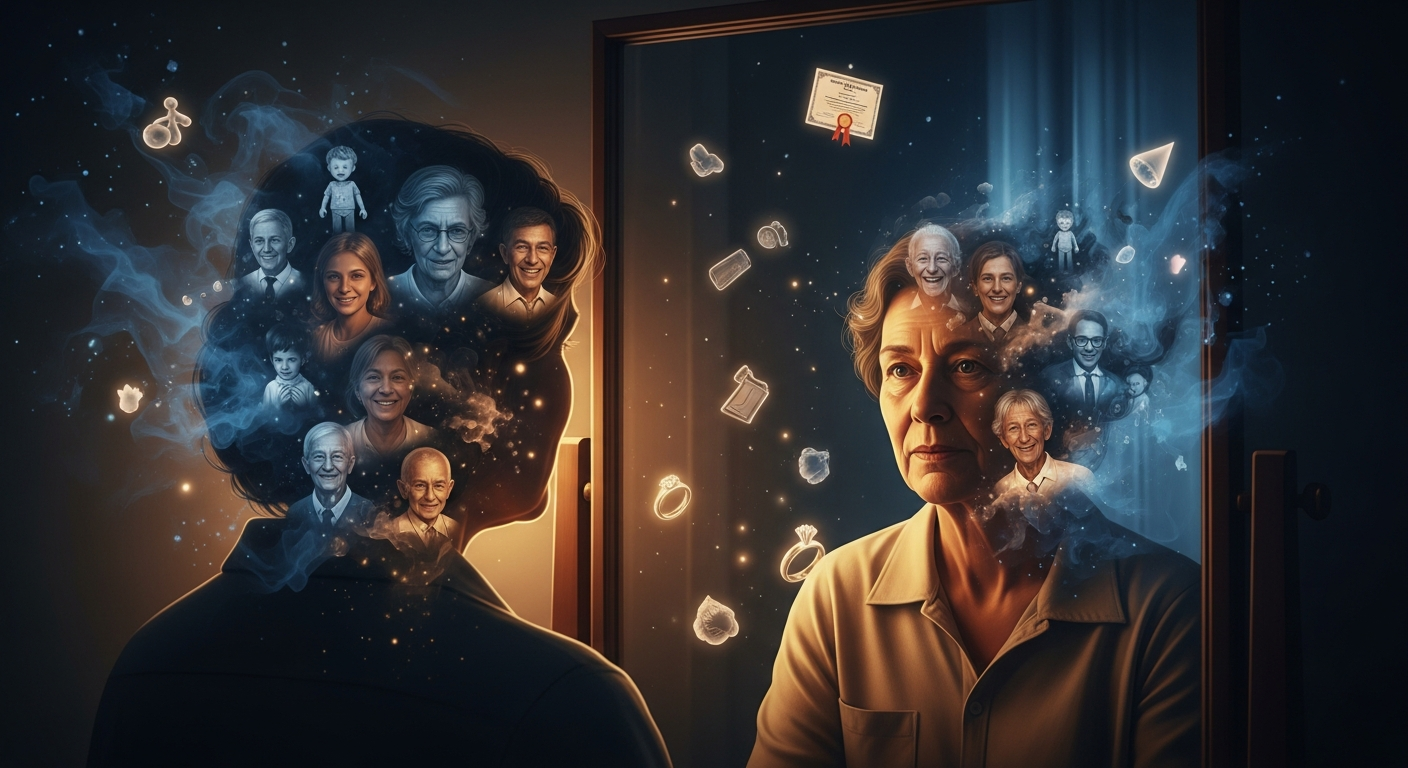
One side believes memory is the self. The other believes the self survives the total erasure of memory. Ten rounds. Two philosophies. One question that could shake everything you think you know about who you are.
Round 1 — Opening Salvo: No Memory, No Self #
The Identitarian: John Locke settled this. Personal identity is the continuity of memory. The “I” that exists today is constituted by the “I” that remembers yesterday. Remove the memory and you remove the self. What you ate, who you loved, what frightened you — that continuous narrative is you. Without the thread, the beads scatter.
The Transcendentalist: Empty shell? Let’s ask Descartes. “I think, therefore I am.” Even if every memory is stripped away, if you are thinking in this moment, something is undeniably there. Memory is an appendix, not the main text. The cogito is grounded in the present activity of consciousness, not in biographical continuity.
Scorecard: Even. Both philosophical foundations are clearly stated and genuinely at odds.
Round 2 — The Newborn Problem #
The Transcendentalist: A newborn has no memories. By your logic, a newborn is nobody — a non-self, a void. But every newborn has a radically unique presence. Embodied cognition theory offers a different answer: the body remembers, and the body is the self. The organism that beats a heart, that flinches at cold, that reaches toward warmth — that is already a self before any biographical memory accumulates.
The Identitarian: Don’t drag infants into this. Infants haven’t formed a self yet — they are pre-personal. That’s not a counterexample; that’s a stage. Narrative identity theory gives us the framework: humans construct the self by authoring the story of their own life. The material for that story is memory. A newborn is a blank page — not no story, but a story not yet begun.
Scorecard: Identitarian’s narrative card is strong. Slight edge.
Round 3 — The Hippocampus and the Tearful Patient #
The Identitarian: Neuroscience is on my side. Damage the hippocampus and you sever the capacity to form new memories and access old ones. The famous case of H.M. — after surgery, he lived in an eternal present, unable to remember who he was, who his family was, what he liked. Every conversation reset. Every day restarted from zero. Is that a self? That is what “self without memory” actually looks like, and it looks like obliteration.
The Transcendentalist: And yet H.M. wept when he heard certain music. He couldn’t explain why. The emotion arose without any accessible memory to justify it. Buddhist philosophy has always known this: there is no fixed, permanent self. What exists is the experience of this present moment. Even without memories, the experiencer remains. H.M. had no memories but he had pain and joy — and that is the most primitive form of selfhood.
Scorecard: Transcendentalist’s counter is sharp. Balance restored.
Round 4 — The Alzheimer’s Blow and Its Lethal Counterpunch #
The Identitarian: Here is the hardest question. Imagine the person you love most. Now imagine they have advanced Alzheimer’s. They look at your face and ask, “Who are you?” Can you honestly say, in that moment, that this is the same person? That nothing has changed? Be honest. Emotionally, you want to say yes. But logically — the person who knew you, loved you, shared a history with you — that person is gone. What remains is a body that resembles them.
The Transcendentalist: …That one hurts. You’re right that the relational self is shattered. But hold on — let me turn this back on you. Every night you fall asleep and consciousness is interrupted. Every time you retrieve a memory, your brain reconstructs it — slightly differently than last time. Neuroscientist Elizabeth Loftus spent decades proving this: human memory is not a recording, it is a reconstruction. And 70% of what you “remember” has been altered, filled in, or fabricated by your brain. If memory is identity, and your memory is mostly false — are you a false self?
The Identitarian: …What?
Scorecard: The Loftus card flips the game. Transcendentalist surges ahead.
Round 5 — The Ship of Theseus #
The Transcendentalist: The Ship of Theseus. Replace the planks one by one until every original plank is gone — is it still the same ship? Human memory does the same thing. Your memory of ten years ago has been re-encoded dozens of times. It bears only a statistical resemblance to the original event. The continuous self you believe in is not a thread — it’s a rope that has had every fiber replaced so gradually you never noticed.
The Identitarian: But the ship’s form and function persisted throughout the replacement. The story’s direction persists even as its material is revised. I have different cells, different memories, different beliefs than I did ten years ago — and yet I am recognizably continuing a story that began with my birth. A tattered book is still a book. Imperfect continuity is still continuity.
The Transcendentalist: A tattered book is still a book, yes. But what about a book where all the pages have blown away and only the cover remains? If you say that’s still a book — then you’ve just conceded that the cover, not the content, constitutes the identity. The cover is the self that precedes and outlasts memory. You just argued my position.
Scorecard: Transcendentalist’s logical reversal is elegant and decisive.
Round 6 — Trauma and the Transformed Self #
The Identitarian: Consider PTSD. Veterans return from war saying “I am not the same person.” Extreme experiences inscribe themselves on memory and fundamentally alter who someone is. This is the most direct clinical evidence that memory changes identity. When memory changes, self changes. The inseparability of memory and identity is not philosophy — it is psychiatry.
The Transcendentalist: Follow that logic and trauma therapy becomes identity destruction. But patients who overcome PTSD don’t say “I became a different person.” They say “I came back to myself.” The healing is described as a return to something that the trauma had buried. That “something to return to” exists beneath and before the traumatic memories. Whatever they came back to — that is the self that memory cannot fully constitute or destroy.
Scorecard: Transcendentalist’s therapeutic insight is powerful.
Round 7 — The Digital Memory Self #
The Identitarian: A new dimension: social media has externalized memory. Instagram feeds, “On This Day” notifications, cloud photo libraries — we now construct identity from digital archives. This is the memory-identity thesis operating in real time. The reason people find it so painful to delete old posts is that those posts feel like parts of themselves. Digital memory has made the connection between memory and self empirically visible.
The Transcendentalist: Social media actually supports my argument. The self you perform on Instagram is a curated subset — a highlight reel, not a person. Everyone intuitively knows their profile is not “really” them. That gap between your digital memory archive and your felt sense of self — that gap is the proof. There is a “real you” that your carefully selected memories cannot capture. The frustration with your online persona is the self asserting itself against its own record.
Scorecard: Transcendentalist turns the digital age paradox into a win.
Round 8 — The Amnesiac’s Existential Terror #
The Identitarian: Clinical reports on acute amnesia patients consistently document profound identity disorientation. The question “who am I?” is not an abstract puzzle for them — it is a lived terror. This is direct experiential evidence that when memory goes, identity actually collapses. Not philosophically but phenomenologically. These are real people in real distress.
The Transcendentalist: I don’t dispute the distress. But notice: there is a subject experiencing that distress. The confusion does not prove the absence of self — it presupposes the presence of a self that is confused. A non-self cannot be disoriented. An amnesiac who is frightened and asking questions is not a person without a self. They are a self without a file cabinet. Buddhist practice is literally the exercise of finding and inhabiting the self that underlies all the files — and the practice works, which means that self is findable.
Scorecard: Transcendentalist consolidates a strong lead.
Round 9 — False Memories Build Real Lives #
The Transcendentalist: Let’s push Loftus further. In her experiments, subjects didn’t just misremember — they generated entirely fabricated memories of events that never happened. People with no history of getting lost as children produced detailed, emotionally resonant memories of being lost. And those false memories shaped their actual behavior: anxiety patterns, attachment styles, self-narratives. If memory is identity, a false memory produces a false identity. But no one thinks the people in these experiments have false identities. Their identities are real — built partly on fictional foundations.
The Identitarian: That shows that the structure of memory matters more than its content. True or false, memories accrete in patterns that shape a self. A novel is fiction, but the experience of reading it is real and it genuinely transforms the reader. The architecture of memory-building is what constitutes identity, not the factual accuracy of the bricks.
The Transcendentalist: But you just shifted from “memory is identity” to “the experience of accumulating memories is identity.” That is my position. It’s the present experience — the ongoing activity of consciousness encountering the world — that constitutes the self. Memory is the imperfect archive of that experience. You’ve moved to my side.
Scorecard: Transcendentalist decisively ahead.
Round 10 — Final Resolution: Canvas and Paint #
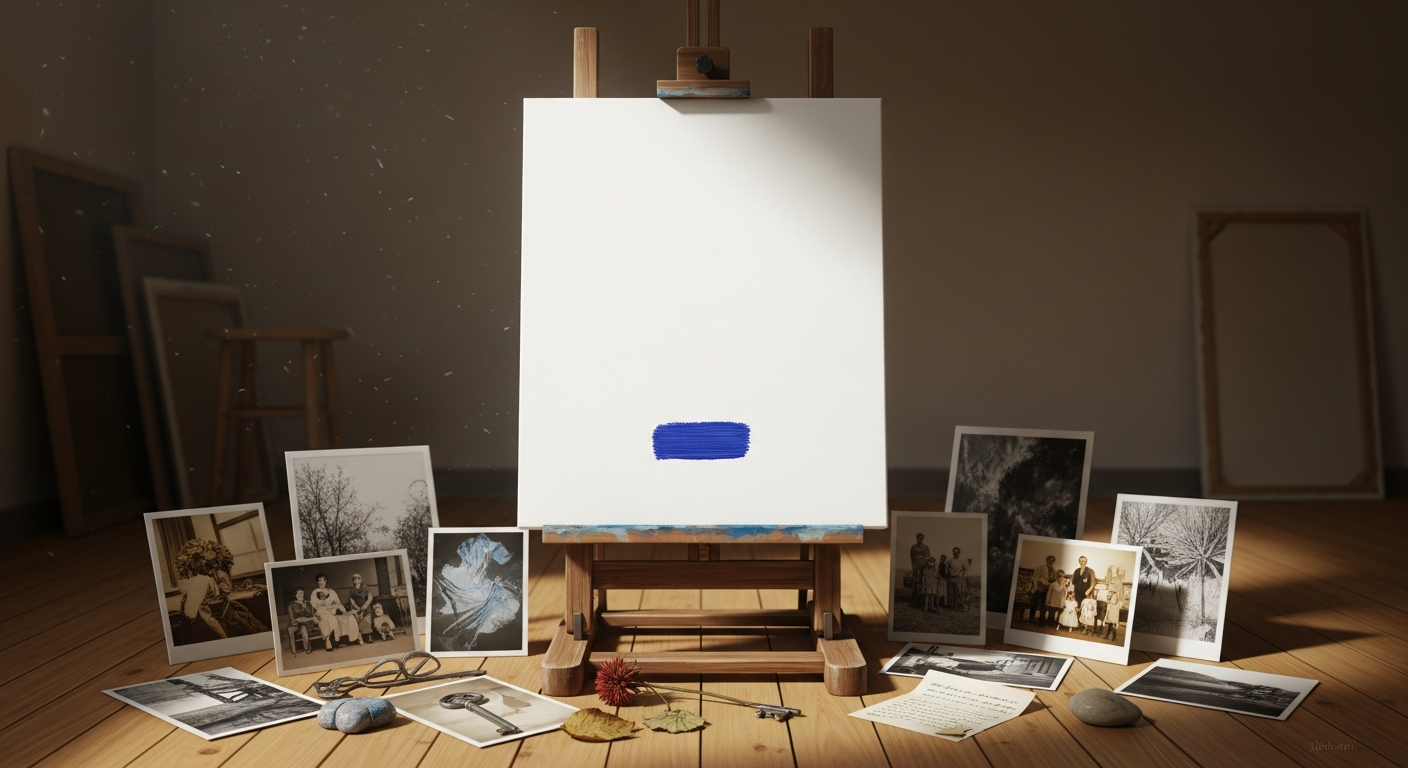
The Identitarian: I concede. The moment I acknowledge that memories can be fabricated and still constitute a real self, I’ve cut the ground from under my own position. If memory’s factual content is irrelevant to identity, then memory itself is not the foundation — only the experience that generates it. There is something prior to memory. I’ve been defending the paint and ignoring the canvas.
The Transcendentalist: I accept that concession, and I’ll offer a full picture in return. Memory is the paint — it gives the self its color, texture, richness, history. A self without memory is still a self, but it is an impoverished one. The grandmother who no longer recognizes her granddaughter has lost her memories of that relationship. That loss is real and devastating. But she has not lost her existence as a subject. She still feels warmth and cold, comfort and fear. That capacity — the canvas — was there before the first memory was painted and will remain when all the paint is gone.
The Identitarian: Then our final agreement: memory enriches and shapes identity, but identity’s foundation is the experiencing subject that precedes and survives memory. The self is not the story. It is the one who lives through the story, even when the story is forgotten.
The Transcendentalist: And that subject — whoever it is — is you. Unfinished, unverifiable, irreducible.
Scorecard #
| Criterion | The Identitarian | The Transcendentalist |
|---|---|---|
| Philosophical Grounding | John Locke (personal identity = memory continuity), narrative identity, neuroscience (hippocampal damage) | Descartes (cogito), Buddhist non-self (anatta), embodied cognition, Loftus (false memory) |
| Core Claim | Continuous memory constitutes the self | The experiencing subject persists independent of memory |
| Strongest Blow | “A person who forgets you is effectively a different person” (R4) | “70% of your memories are fabricated reconstructions” (R4 counter) |
| Round Score | 3 / 10 | 7 / 10 |
| Logic | ★★★★☆ | ★★★★★ |
| Emotional Power | ★★★★★ | ★★★☆☆ |
| Decisive Moment | R4 first half — Alzheimer’s emotional assault | R4 second half — Loftus destroys the foundation |
| Verdict | Defeated (logical collapse, graceful concession) | Winner |
| Best Line | “A tattered book is still a book” | “When all the paint is gone, the canvas remains” |
Take a moment and reach for your oldest memory.
Does it feel vivid and certain? Now consider: every time you have retrieved that memory, your brain has quietly edited it. The version you are accessing right now is not the original. It has been reconstructed, recolored, and partially invented — and you have no way of knowing which parts.
If that memory is partly false, and memory is who you are — then what does that make you?
Or: you are reading this sentence, right now, and something is here receiving these words. That something was here before you thought about your first memory. It will be here after you’ve forgotten reading this.
Are you your memories? Or are you the one who has them?