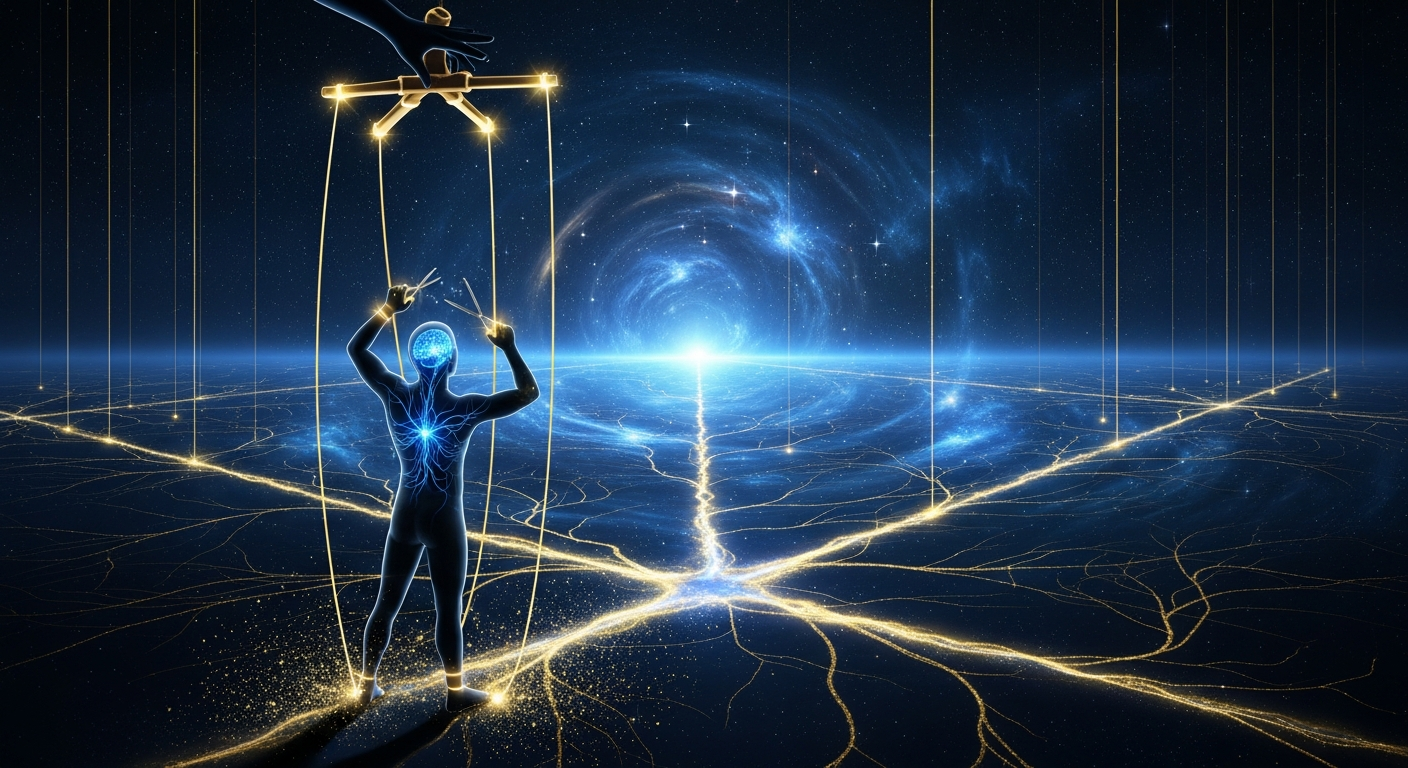
“Did you choose to click on this article — or did your brain decide before you were even aware of it?”
Round 1 — Opening: Autonomy vs. the Causal Chain #
Free Will Affirmatist: Kant drew the sharpest line. Human beings are the only creatures who can give themselves laws and follow them. Not instinct. Not conditioning. Self-legislation. You woke up this morning and chose to do something difficult when everything in your body screamed against it — got up when you wanted to stay in bed, held your tongue when you wanted to lash out, kept a promise when breaking it would have been easy. That gap between impulse and action — that’s not mechanics. That’s freedom. A thermostat responds to temperature. You respond to reasons. The difference between reacting and choosing is the entire distance between a machine and a person.
Determinist: Inspiring rhetoric. But let’s trace what actually happened in your brain when you “chose” to get up. Your cortisol and adrenaline levels rose with the alarm — a biochemical response, not a decision. Your prior experience of job loss anxiety — encoded as neural pathways — activated threat-response circuitry. Your dopaminergic system calculated the pleasure-pain calculus of the next few hours. The output was: get up. There was no ghost in the machine deliberating. There was only physics. Laplace’s demon — a hypothetical intelligence that knew the position and velocity of every atom in the universe — could have told you last night exactly what you would do this morning. You didn’t choose. You executed.
Round 2 — The Libet Experiment #
Determinist: In 1983, Benjamin Libet ran the definitive experiment. Subjects were told to flex their wrist whenever they felt like it, and to note the position of a clock hand at the moment they first felt the urge to move. Meanwhile, EEG measured their brain activity. The result was devastating for free will: the brain’s “readiness potential” — the buildup of electrical activity preceding the movement — began an average of 550 milliseconds before the action. But subjects didn’t report the conscious intention to move until about 200 milliseconds before the action. The brain had already started the process 350 milliseconds before the person was aware of deciding anything. Your consciousness doesn’t drive. It watches from the back seat and narrates.
Free Will Affirmatist: I know that experiment well — and so did Libet. He reported something the determinists conveniently leave out: subjects who were shown the clock could also veto the movement after the readiness potential had already fired. They could stop themselves. Libet called it “free won’t” — the capacity to inhibit an action that the brain had already initiated. The unconscious brain may generate impulses, but consciousness holds the veto. If I have the power to say no to my own brain’s outputs, that is a form of freedom. Not the freedom to generate impulses from nowhere — but the freedom to refuse them. And that refusal is precisely what moral life is built on.
Round 3 — Spinoza’s Stone #
Free Will Affirmatist: Descartes gave us the bedrock: “I think, therefore I am.” The very act of doubt — of questioning whether I exist, whether I’m free — requires a subject who is doing the questioning. That subject doesn’t disappear just because you point to brain chemistry. Sartre pushed further: human beings are “condemned to be free.” You cannot opt out of choosing. Deciding not to decide is itself a decision. The person who says “I had no choice” is making a choice — the choice to frame their situation as choiceless. The structure of human consciousness is inescapably first-personal, inescapably deliberative. Mechanisms don’t wonder whether they’re mechanisms.
Determinist: Spinoza cut through that exactly. “If a stone thrown through the air had consciousness, it would believe it was flying of its own free will.” Your consciousness is that stone. It experiences the flight as chosen, because it has no view from outside the causal sequence that produced it. The cogito proves that a thinking subject exists. It proves nothing about whether that subject is free. You cannot deduce liberty from interiority. The vividness of the feeling of choosing is not evidence that choice is real — it’s evidence that the brain produces very convincing phenomenology. The prisoner who doesn’t know he’s in prison doesn’t feel imprisoned.
Round 4 — Quantum Mechanics Enters the Ring #
Determinist: Here is the steel trap. Your genes: not chosen. Your early environment: not chosen. The neural architecture that formed during your first years of life: not chosen. The sum total of who you are — your dispositions, your fears, your values, your characteristic responses — was assembled from components you had no hand in selecting. The “you” that supposedly makes free choices is itself entirely a product of prior causes. Free will requires a self that stands outside the causal chain. There is no such self. There are only cascading consequences going back to before you existed.
Free Will Affirmatist: Wait. Before you seal the trap — I’ll be honest: I don’t believe in absolute free will, the kind that floats free of all causation. No philosopher worth reading defends that. But your determinism rests on a physical picture that quantum mechanics has already demolished. At the quantum level, the position of an electron before measurement is not determined — it is described by a probability function. Heisenberg’s uncertainty principle is not a limitation of our instruments. It is a feature of reality. If the physical universe is fundamentally non-deterministic at its base layer, Laplace’s demon cannot exist even in principle. Your iron cage has no floor.
Determinist: …Quantum indeterminacy is randomness, not freedom! A radioactive atom decays at a random time — that randomness is not a choice. If my neurons fire because of quantum noise rather than prior causes, that doesn’t make me free — it makes me a roulette wheel. You’ve replaced iron determination with dice. That’s not liberation. That’s just a different kind of unfreedom.
Round 5 — The Argument from Regret #
Free Will Affirmatist: Agreed — quantum randomness alone doesn’t give us freedom. I concede that point. But here is what I’m confident about: pure determinism is already broken as a physical theory, and human beings possess something that exceeds mere randomness. Regret. Machines don’t regret. Algorithms don’t lie awake thinking “if only I had done differently.” Regret is logically impossible without the presupposition that you could have done otherwise. When you regret something deeply, you are not running an error report — you are bearing witness to the reality that you had a choice, and chose wrongly. If the whole architecture of moral emotion — guilt, remorse, pride, resolution — depends on the possibility of having chosen differently, and if human beings universally experience this architecture, that is evidence. Powerful evidence.
Determinist: Regret is a neurochemical state. When serotonin drops and rumination networks activate, you experience what we call regret. Antidepressants can reduce it. Brain lesions can eliminate it. The feeling of “I could have done otherwise” is not a perception of metaphysical possibility — it is a cognitive model, a simulation your brain runs to update future behavior. Evolution favored brains that run this simulation because it improves decision-making. The simulation is adaptive. It is not a window onto libertarian freedom.
Free Will Affirmatist: And the decision to take that antidepressant — whose is it?
Determinist: …The result of your current neurochemistry, your doctor’s advice, your prior beliefs about medication, your socioeconomic capacity to access it.
Free Will Affirmatist: You can trace every choice back to prior causes forever. At some point that regress just becomes a way to avoid engaging with what’s actually happening: a person, deliberating.
Round 6 — Criminal Justice and the Dissolving Self #
Determinist: Here’s where the stakes become concrete. If free will is real, punishment is justified. If it isn’t, the entire edifice of criminal justice needs rebuilding. And neuroscience is already forcing that conversation. In 2002, a 40-year-old man with no prior history began collecting child pornography and making advances on his stepdaughter. He was convicted. Before sentencing, doctors discovered an egg-sized tumor pressing on his orbitofrontal cortex — the region governing impulse control and moral judgment. The tumor was removed. The behavior stopped. The tumor grew back. The behavior returned. Was he culpable? In what meaningful sense did he “choose” those actions? If brain states determine behavior in cases of damage, why do they not determine behavior in cases of normal function?
Free Will Affirmatist: That case deserves serious weight. It does. But notice the logical move you’re making: you’re inferring from “damaged systems produce determined behavior” to “intact systems also produce determined behavior.” That inference doesn’t hold. We distinguish malfunction from function precisely because there is a functional state against which malfunction is measured. The intact prefrontal cortex is the seat of deliberation, weighing, and restraint — and when it works, it produces behavior that is genuinely responsive to reasons. “Responsive to reasons” — that’s the key phrase. A boulder isn’t responsive to reasons. A human being, whose behavior changes when you show them an argument, whose life trajectory shifts when they read a book — that responsiveness to reasons is what we mean by freedom, and it’s real.
Round 7 — Moral Responsibility Under Pressure #
Determinist: But extend the tumor logic. The man with the tumor had no choice. What about the man who grew up watching his father beat his mother, who learned that violence is how men deal with powerlessness, whose amygdala was shaped by chronic stress to be hyperreactive, whose prefrontal development was stunted by poverty and instability? He didn’t choose his childhood. He didn’t choose what it did to his brain. Neuroscience is unambiguous: chronic trauma physically alters brain structure. The man who commits violence from a trauma-shaped brain is not making a free choice — he is enacting a neurological program he was given without consent. Free will is a doctrine that the privileged use to avoid responsibility for the conditions they create.
Free Will Affirmatist: I take that critique seriously — it’s the strongest version of your argument. Trauma is real. Developmental deprivation is real. Its neurological effects are real. But consider Viktor Frankl. Auschwitz. Everything stripped away — family, freedom, dignity, future. His conclusion, written from inside that horror, was that the last human freedom — the freedom to choose one’s attitude toward one’s circumstances — was the one thing that could not be taken. He watched men in the same conditions make radically different choices about who to be in the face of annihilation. The same hell. Different responses. Not because their neurons were different — but because something the determinists have no good word for made the difference. Call it the self. Call it personhood. Call it what you want. It doesn’t reduce.
Round 8 — Compatibilism Steps Forward #
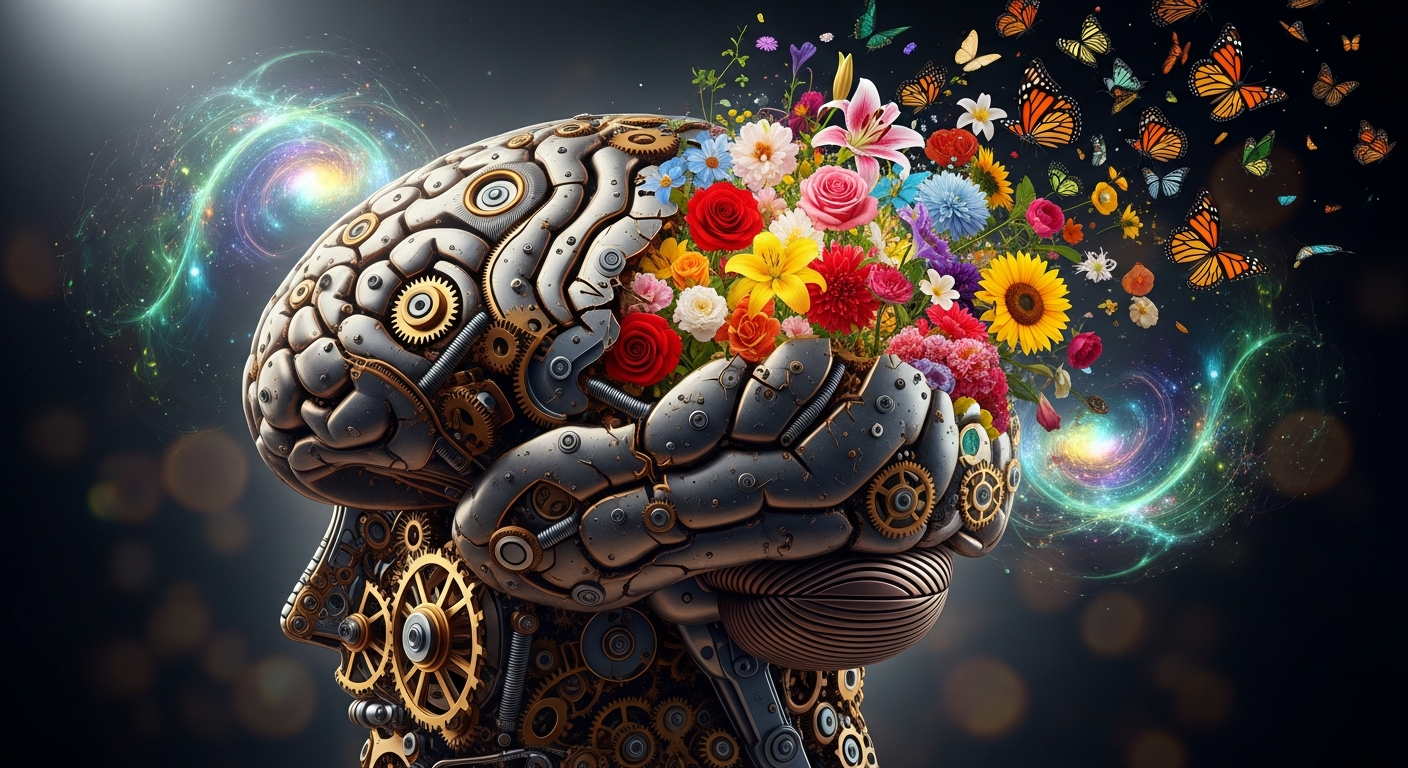
Determinist: Frankl is a genuinely difficult case for hard determinism. I’ll acknowledge that honestly. But let me move the conversation somewhere more productive. Hard determinism — the view that the word “could have done otherwise” is simply meaningless — may be too strong. Compatibilism offers a more defensible position: free will and determinism are not in conflict, because “free will” properly understood just means acting in accordance with your own desires and reasons, without external coercion. On that definition, the person who acts under a gun is not free. The person who acts from their own reflection is. The causal history doesn’t matter. What matters is the proximate mechanism: was it reasons, or was it force?
Free Will Affirmatist: If you’re a compatibilist, then you’ve just granted everything I need. Because on the compatibilist account, free will exists. It’s not the god-like freedom to be uncaused — but it’s real freedom, grounded in rationality, deliberation, and responsiveness to reasons. And if it’s real, it grounds moral responsibility. It makes punishment intelligible. It makes praise meaningful. It makes personal growth more than mere chemistry. I’m happy to fight on compatibilist ground. On that ground, I win.
Round 9 — AI and the Edge of the Question #
Determinist: Let me try one more angle. Large language models generate responses by running probabilistic calculations over learned patterns. The output can be sophisticated, contextually sensitive, even surprising. But we don’t say the AI chose its words. We say it computed them. Now: if the human brain is a biological information-processing system — vastly more complex, but running on similar principles of pattern recognition and prediction — what is the principled difference? Is the difference just complexity? Does consciousness emerge from enough neurons firing, and does freedom emerge from consciousness? Or are you just drawing lines at the edge of your own comprehension?
Free Will Affirmatist: The question of AI is genuinely fascinating and I won’t pretend I have a complete answer. But here’s the difference that seems important to me: the AI does not question its own training. It does not look at its outputs and wonder whether its learned patterns are biased, corrupt, or pointing in the wrong direction. It does not experience what I can only call the vertigo of self-reflection — the moment when you realize your deepest convictions might be wrong and decide to investigate. That capacity for self-directed revision — for turning the scrutinizing gaze inward and genuinely changing what’s there — is what I mean by free will. Not uncaused causation. Responsive self-authorship.
Determinist: That self-reflection is also a brain process.
Free Will Affirmatist: Yes. And the question is whether there is a meaningful difference between a brain process that merely executes, and a brain process that interrogates its own execution. I think there is. You might not. But the burden of proof is on the person claiming the difference doesn’t exist.
Round 10 — The Final Reckoning #
Determinist: I’ve reached the edge of my own position and I have to be honest about what I find there. Hard determinism — the view that nothing could ever have gone otherwise — destroys itself when you examine it. Right now, I am trying to persuade you. That act of persuasion presupposes that you have the capacity to evaluate my argument and change your position. In other words, it presupposes that you have some form of rational agency — which is precisely what the free will side is defending. A thoroughgoing determinist should never argue. They should just describe. The moment I try to change your mind, I’ve admitted you have one — and that minds can change through reasons, not just causes. Determinism is self-defeating the moment it opens its mouth.
Free Will Affirmatist: And I’ll meet you halfway. Perfect free will — completely uncaused, utterly autonomous, independent of all prior history — doesn’t exist and is probably incoherent. We are shaped by genes, by childhood, by the particular firing patterns of neurons we did not design. Kant’s purely rational autonomous will is an ideal, not a description. But the gap between “shaped” and “determined” is where human life actually happens. In that gap: deliberation, regret, moral growth, the experience of temptation and its resistance, the possibility of becoming someone different from who you were. None of that is illusion. All of it is real. And all of it depends on a form of freedom that exists — not absolutely, but sufficiently.
Determinist: Then perhaps we can close here. Humans are neither fully free nor fully determined. The hard versions of both views collapse. And in the space between them — in the honest acknowledgment that we are caused creatures who nonetheless genuinely choose — we find something more interesting than either pure position. Something that has no perfect name, but that everyone who has ever changed their life recognizes immediately.
Scorecard #
| Category | Free Will Affirmatist | Determinist |
|---|---|---|
| Philosophical Grounding | Kant (moral autonomy), Descartes (cogito), Sartre (radical freedom), Viktor Frankl | Laplace’s demon, Libet experiments, Spinoza, neuroscience of behavior |
| Strategy | Counter-examples, phenomenological evidence, self-refutation arguments | Reductionism, empirical research, logical entailment |
| Decisive Moment | R4 — deployed quantum indeterminacy to crack the physical foundation of determinism | R2 — Libet experiment as devastating evidence against conscious agency |
| Vulnerability | Quantum-to-freedom inference is not fully closed | Self-refutation: the act of persuasion assumes free will |
| Final Standing | Win — established limited but real free will on compatibilist grounds | Defeat — conceded self-refutation; retreated to compatibilism |
Final Verdict: Pure determinism is self-defeating. Perfect free will is a fantasy. Human freedom lives in the space between — real enough to ground responsibility, constrained enough to warrant compassion.

After finishing this, if something has shifted in how you see the question — ask yourself whether that shift was inevitable, or whether you just made it happen. The fact that you can’t quite decide is not a bug. It’s the whole point.